EPS: beat or miss, explained. Why a stock can fall on record profits.


By Nexqual Desk ·
EPS: beat or miss, explained. Why a stock can fall on record profits.
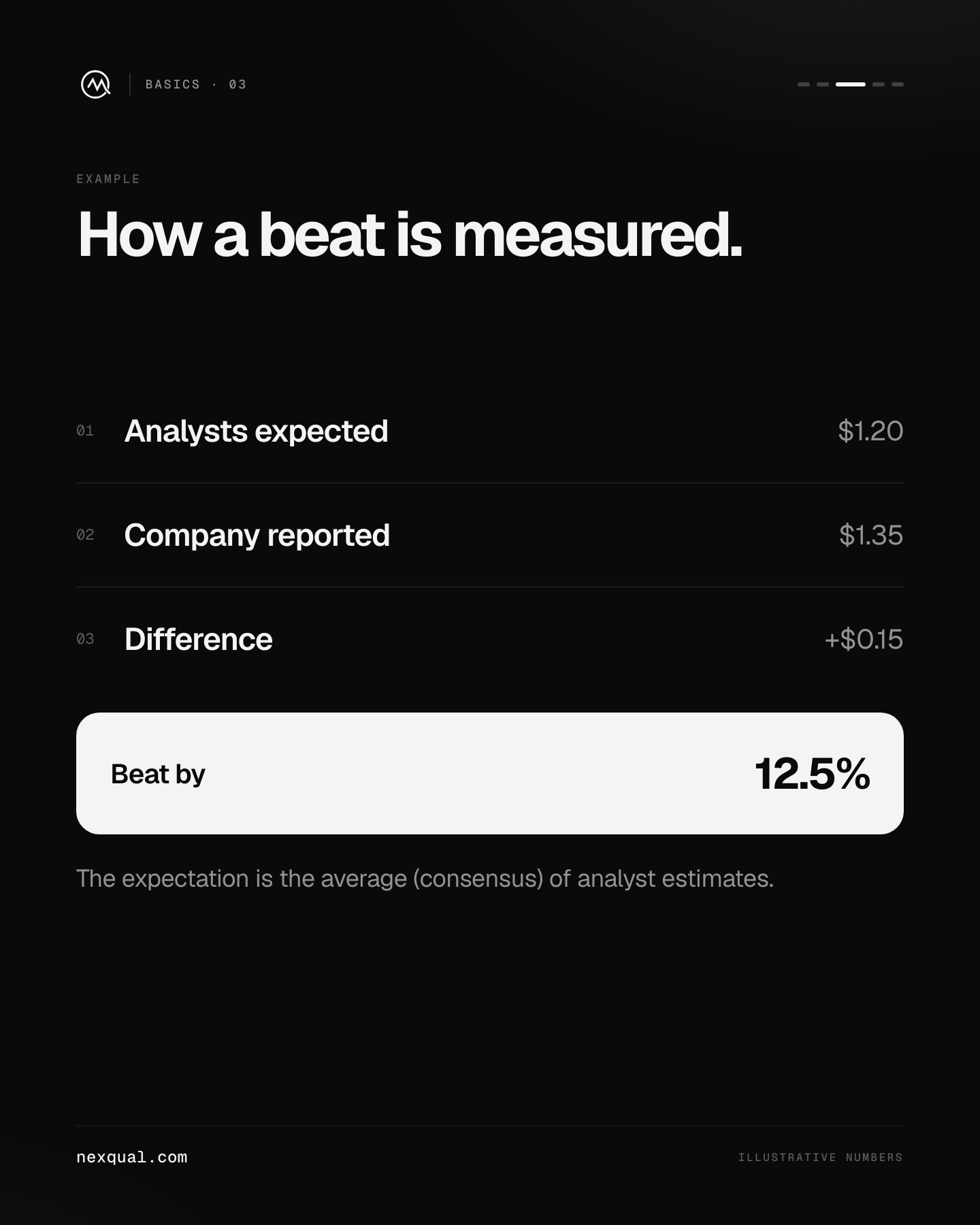
Earnings per share is net profit divided by the number of shares. On earnings day it is compared with what Wall Street analysts expected.
Net profit ÷ Shares outstanding
$2 billion profit and 1 billion shares → EPS of $2.00.
How to read it:
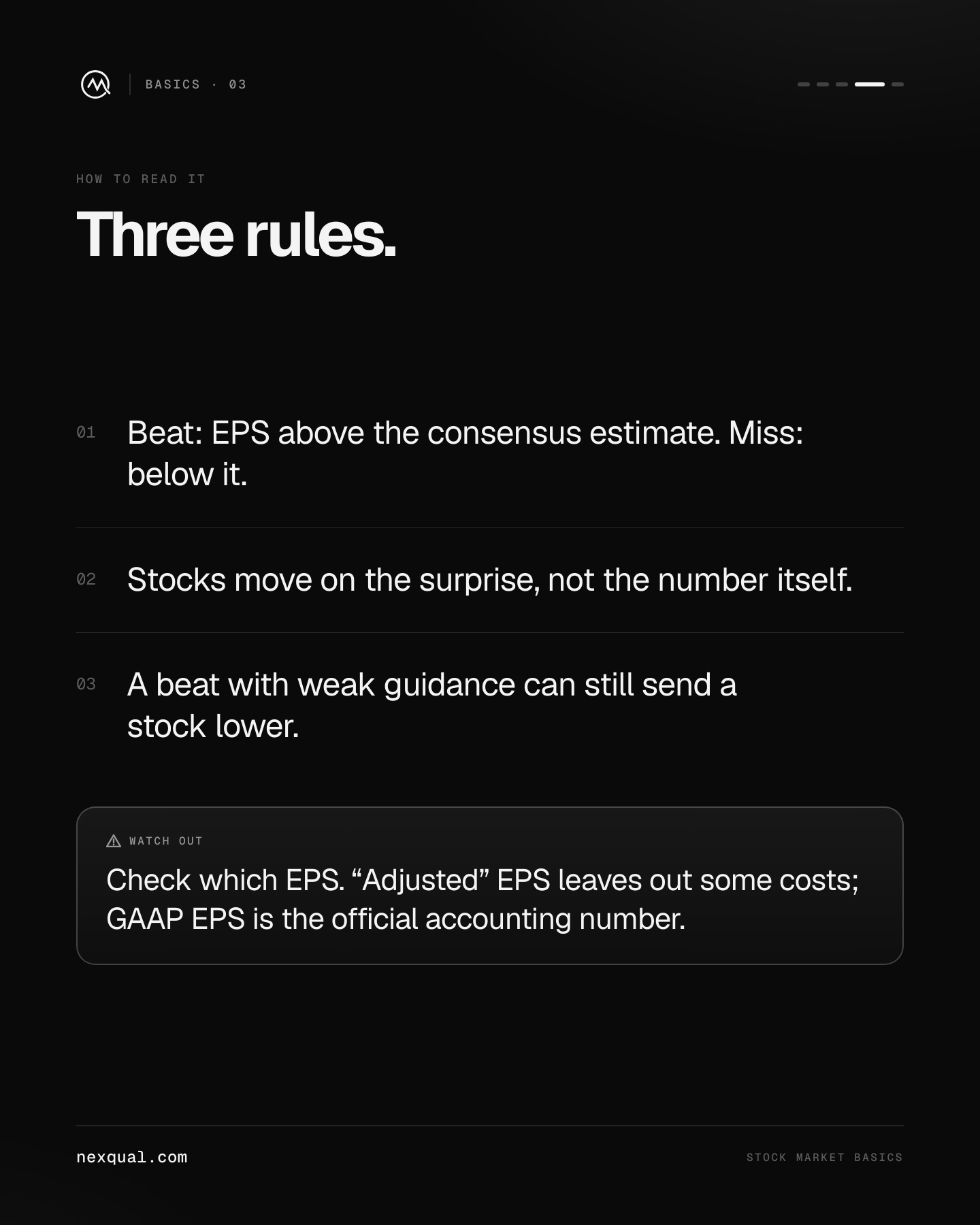
• Beat: EPS above the consensus estimate. Miss: below it.
• Stocks move on the surprise, not the number itself.
• A beat with weak guidance can still send a stock lower.
Watch out: Check which EPS. “Adjusted” EPS leaves out some costs; GAAP EPS is the official accounting number.
Save this for later. Next up: Market cap.
Education only. For information only, not financial advice.
1 likes
Posted on Nexqual Sonar — the social network for the stock market. Not financial advice.