Stock splits, explained. More shares, lower price, same value.
By Nexqual Desk ·
Stock splits, explained. More shares, lower price, same value.
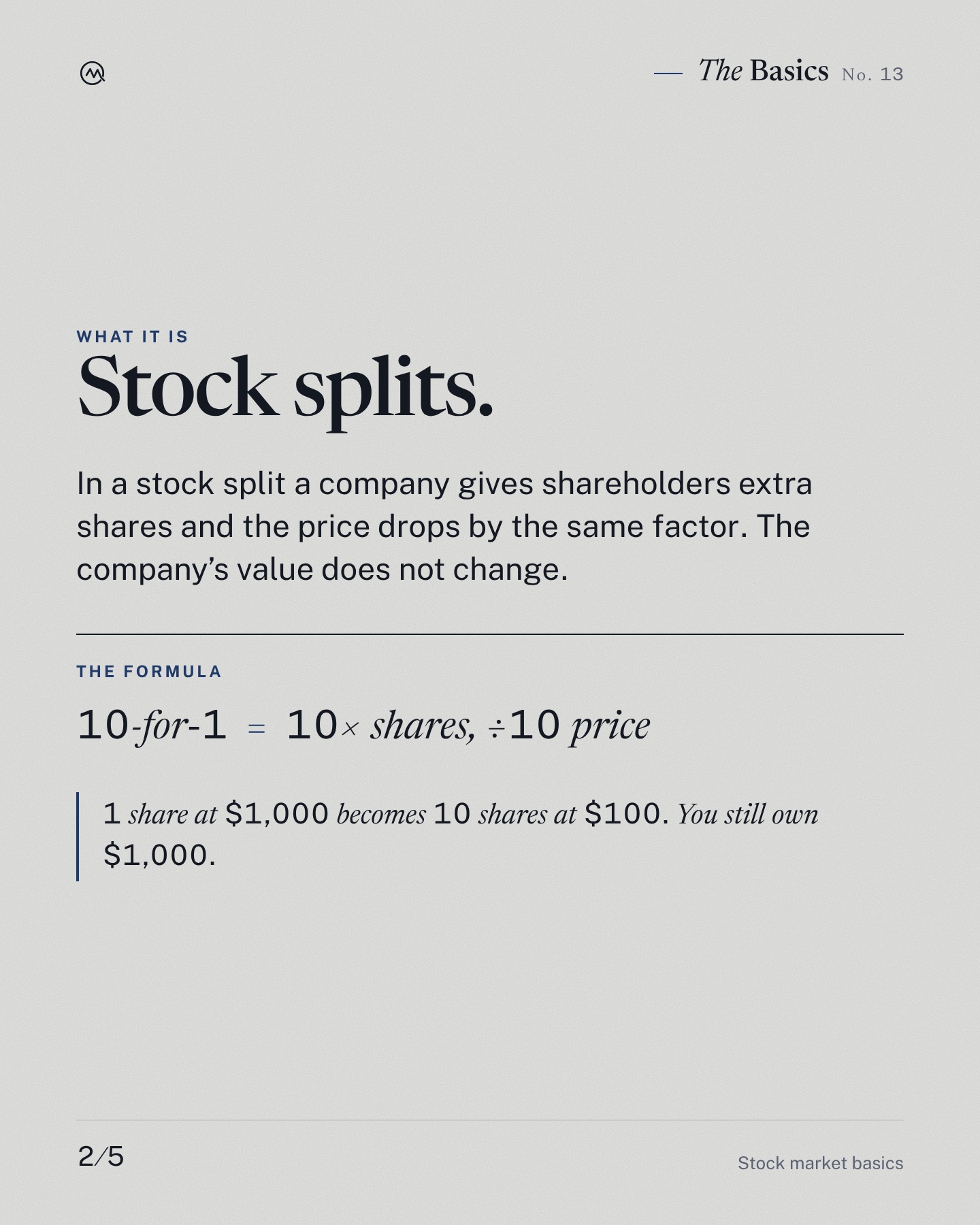
In a stock split a company gives shareholders extra shares and the price drops by the same factor. The company’s value does not change.
10-for-1 = 10× shares, ÷10 price
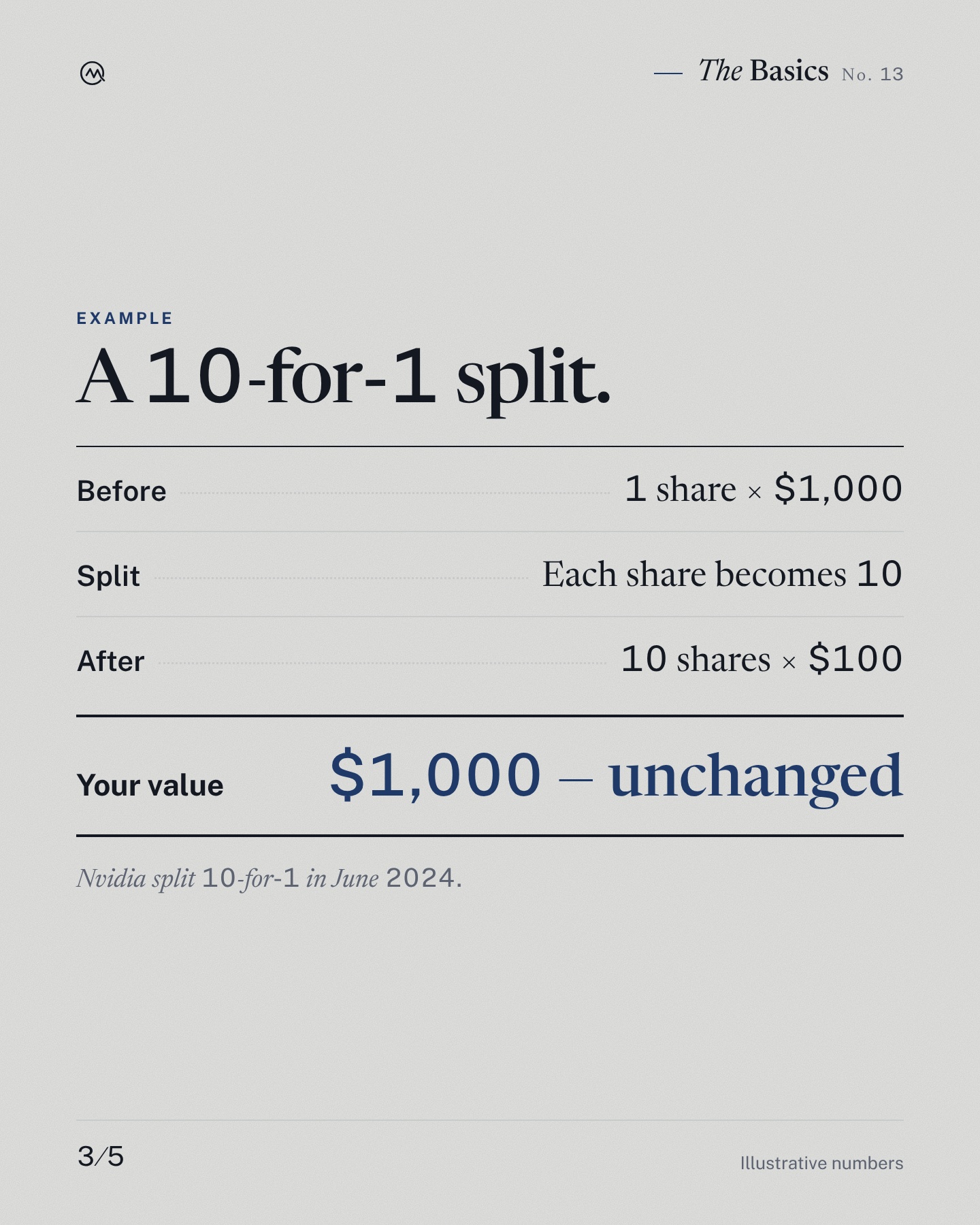
1 share at $1,000 becomes 10 shares at $100. You still own $1,000.
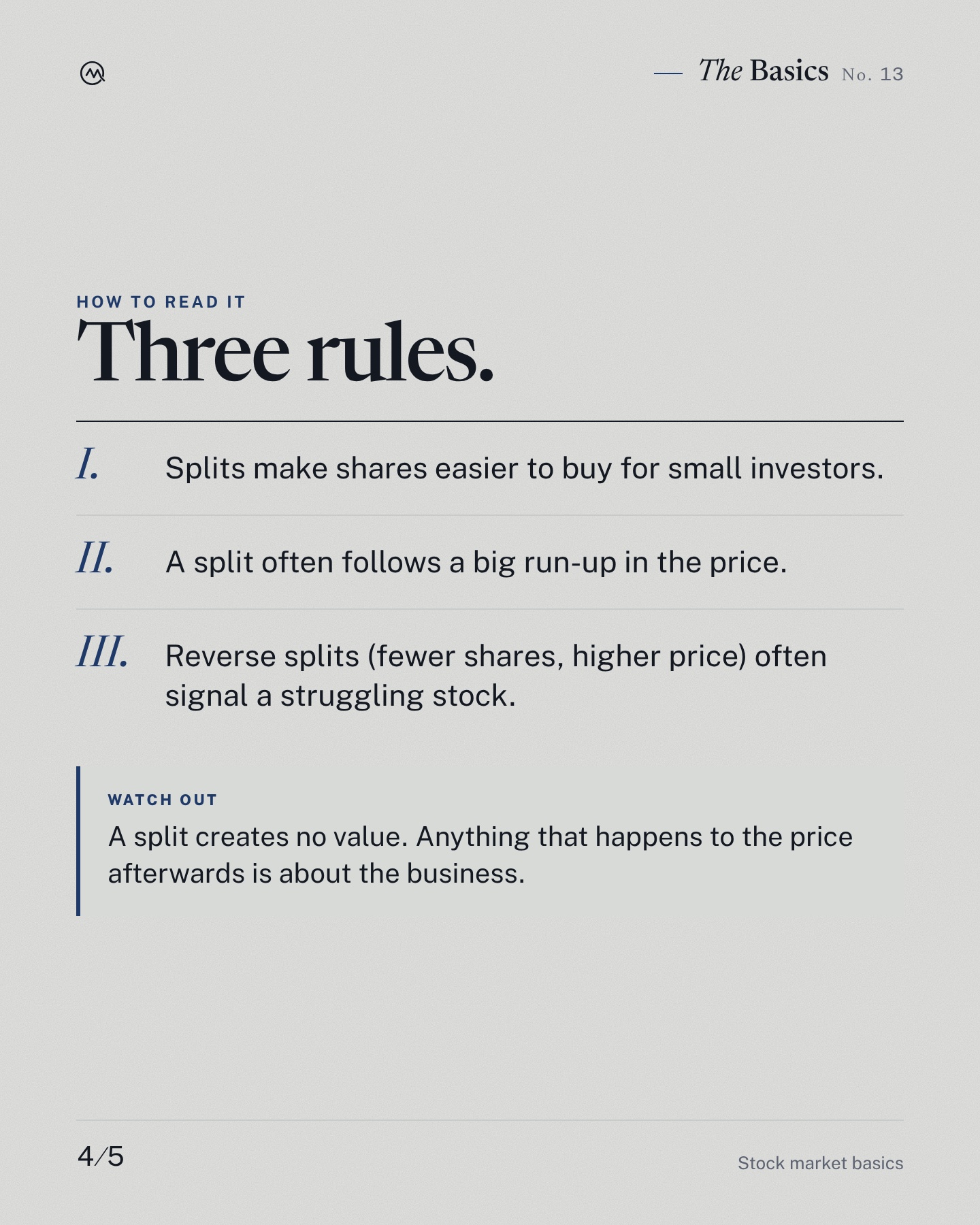
How to read it:
• Splits make shares easier to buy for small investors.
• A split often follows a big run-up in the price.
• Reverse splits (fewer shares, higher price) often signal a struggling stock.
Watch out: A split creates no value. Anything that happens to the price afterwards is about the business.
Next up: Price-to-sales.
Education only. Not financial advice.
0 likes
Posted on Nexqual Sonar — the social network for the stock market. Not financial advice.