Price-to-sales, explained. Valuing a company that has sales but not much profit.
By Nexqual Desk ·
Tickers: $NVDA $MSFT $AAPL $CRM $AMZN $WMT
Price-to-sales, explained. Valuing a company that has sales but not much profit.
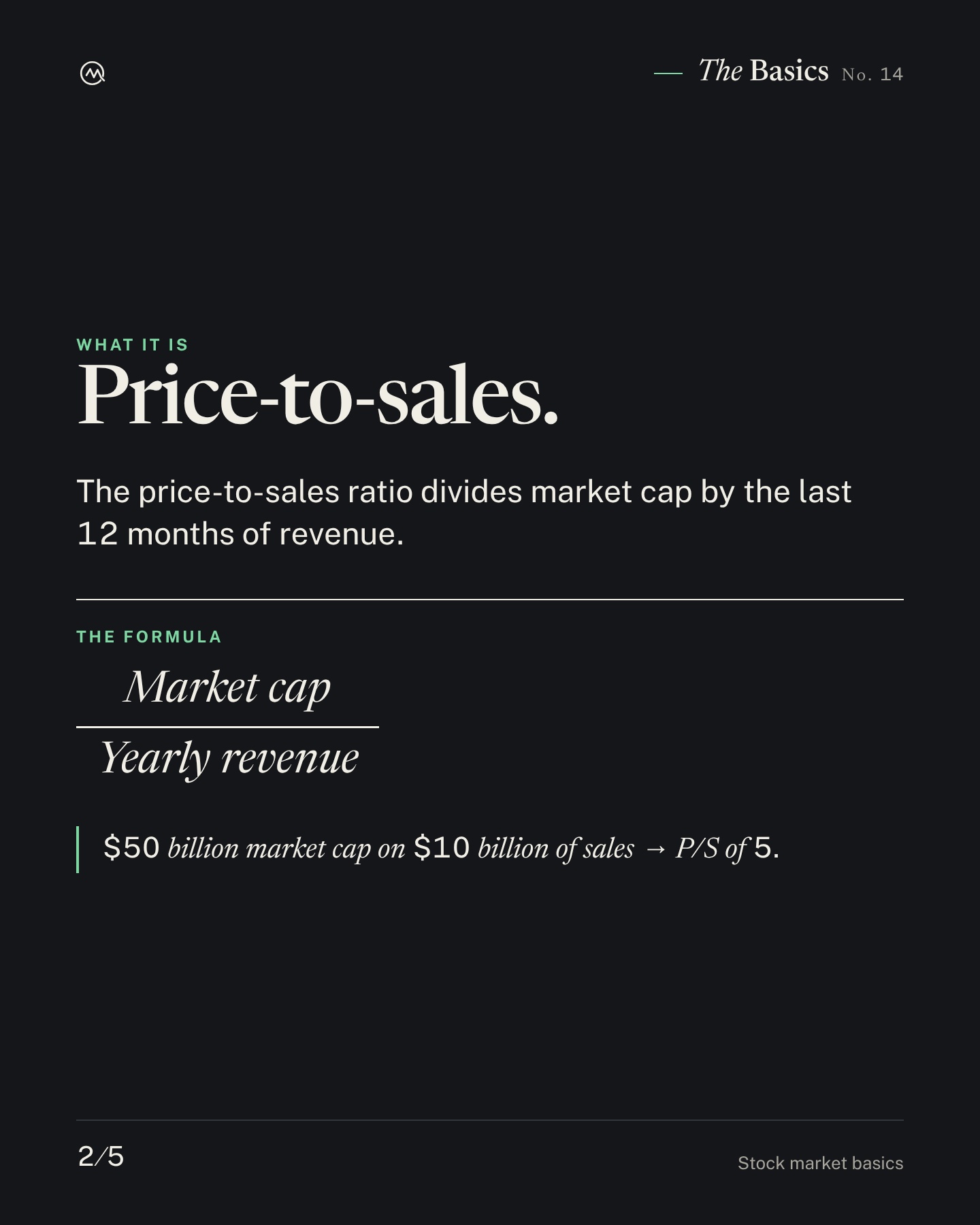
The price-to-sales ratio divides market cap by the last 12 months of revenue.
Market cap ÷ Yearly revenue
$50 billion market cap on $10 billion of sales → P/S of 5.
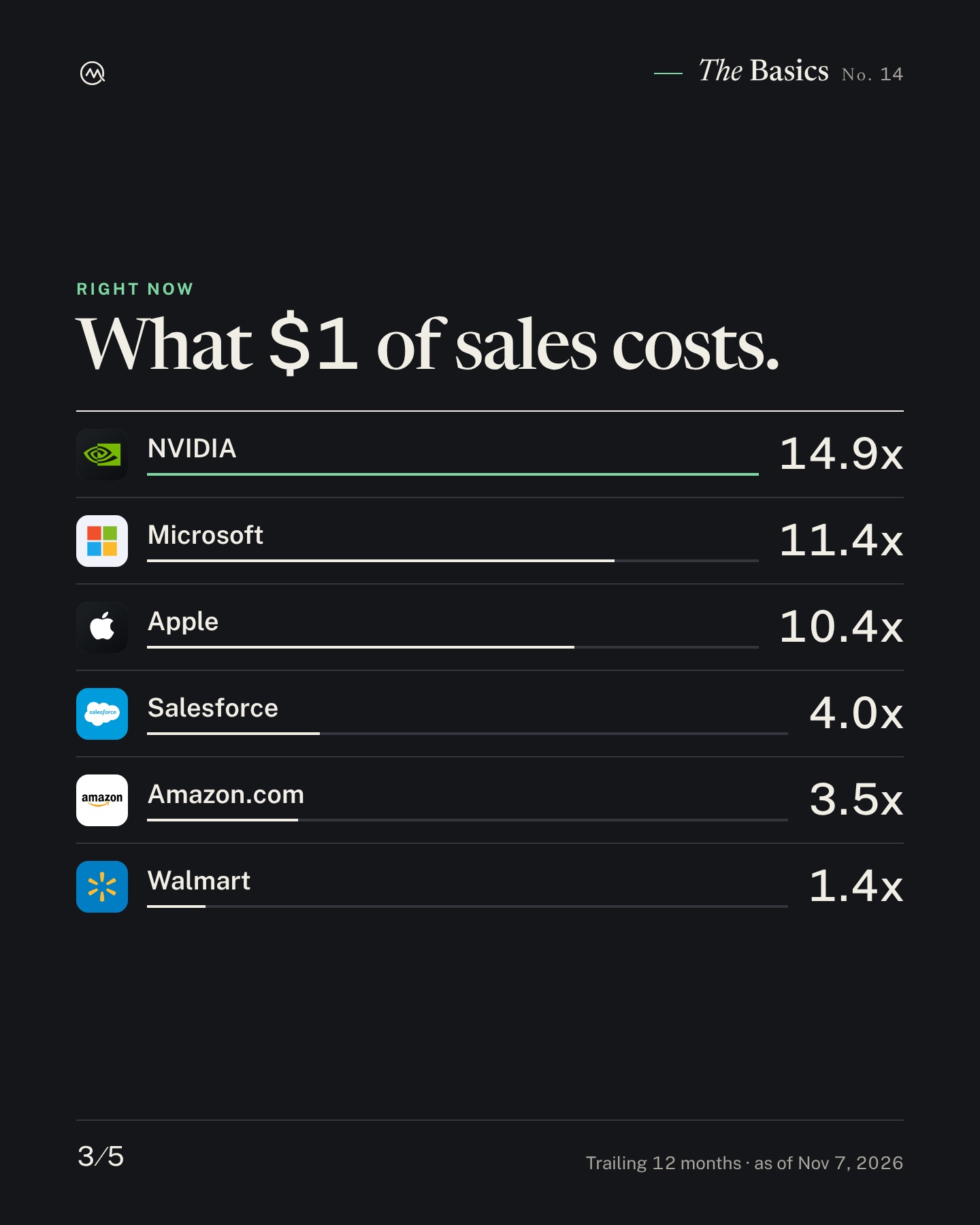
Right now:
$NVDA 14.9x
$MSFT 11.4x
$AAPL 10.4x
$CRM 4.0x
$AMZN 3.5x
$WMT 1.4x
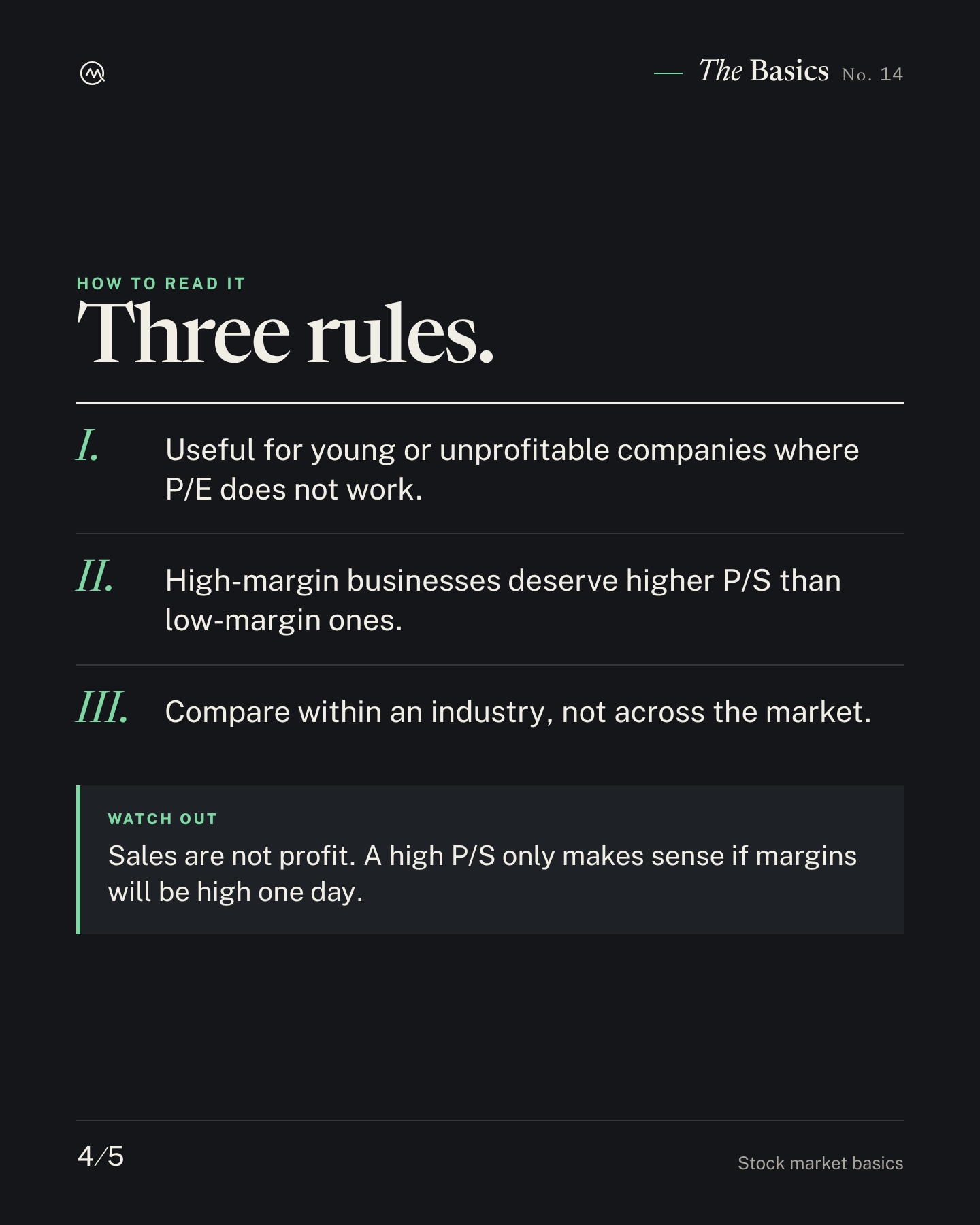
How to read it:
• Useful for young or unprofitable companies where P/E does not work.
• High-margin businesses deserve higher P/S than low-margin ones.
• Compare within an industry, not across the market.
Watch out: Sales are not profit. A high P/S only makes sense if margins will be high one day.
Next up: The Fed decision.
Education only. Not financial advice.
0 likes
Posted on Nexqual Sonar — the social network for the stock market. Not financial advice.